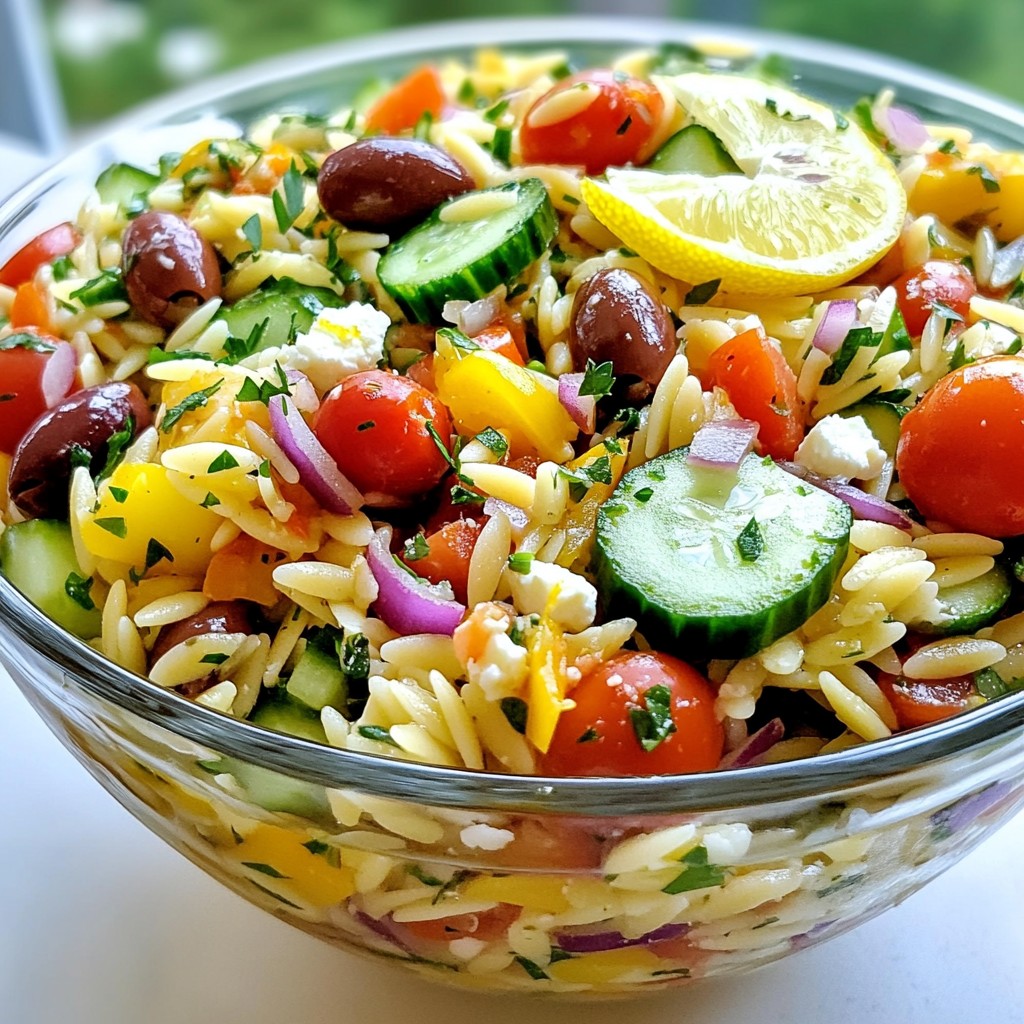
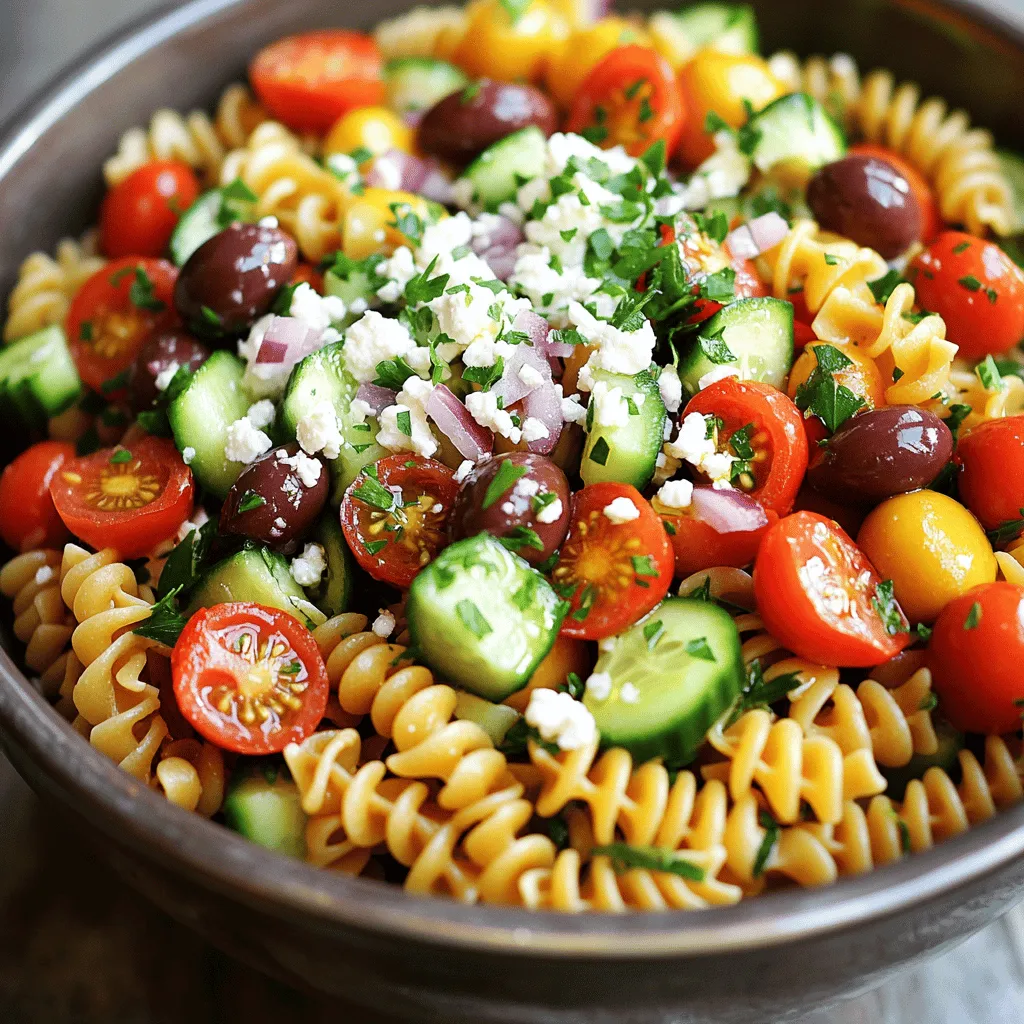
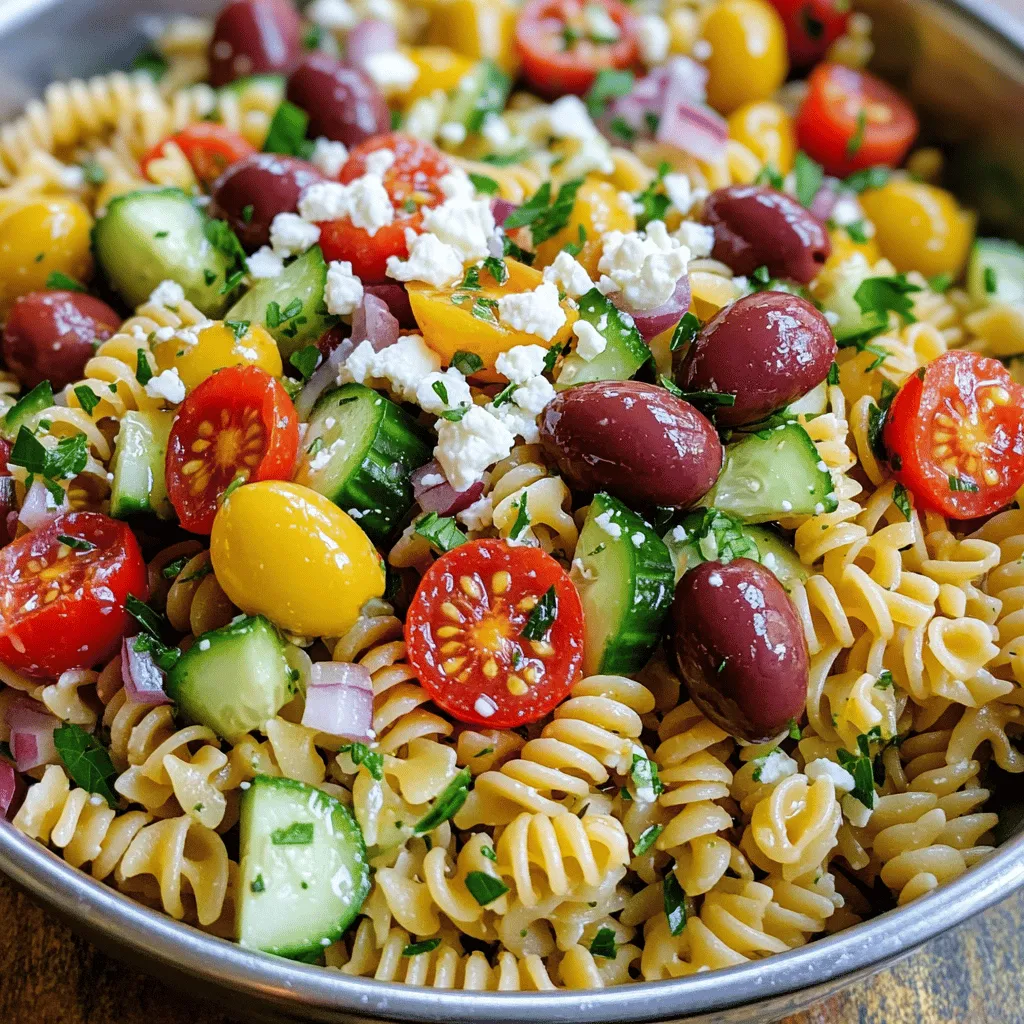
Greek Pasta Salad is a burst of color and flavor. You’ll learn how to mix fresh veggies, olives, and feta for a healthy meal. Perfect for lunch or a light dinner, this dish is quick to make and easy to love. Whether you’re prepping for a picnic or a family dinner, this recipe will impress. Join me as I guide you through steps to create this tasty delight!
Ingredients
List of Ingredients
– 8 oz (230g) whole grain pasta (fusilli or penne)
– 1 cup cherry tomatoes, halved
– 1 cucumber, diced
– 1/2 red onion, finely chopped
– 1/2 cup Kalamata olives, pitted and halved
– 1/2 cup crumbled feta cheese
– 1/4 cup fresh parsley, chopped
– 1/4 cup olive oil
– 2 tablespoons red wine vinegar
– 1 clove garlic, minced
– 1 teaspoon dried oregano
– Salt and pepper to taste
Each ingredient plays a key role in the taste of Greek pasta salad. The whole grain pasta gives a hearty base. I love using fusilli or penne because they hold the dressing well. Cherry tomatoes add a burst of color and sweetness. Cucumbers bring a refreshing crunch that balances the flavors.
Red onion adds a sharp bite. Kalamata olives give a briny taste and depth. Feta cheese adds creaminess and saltiness. Fresh parsley provides a bright note and a pop of green. Olive oil acts as the main dressing, while red wine vinegar adds tang. Garlic and oregano bring aromatic qualities, making every bite delicious.
Nutritional Information
Calories per serving: Approximately 250
Macronutrients breakdown:
– Carbohydrates: 35g
– Protein: 8g
– Fat: 10g
Knowing the nutritional facts helps you enjoy this dish guilt-free. It’s packed with flavor and nutrients. The balance of carbs, protein, and healthy fats makes it a great meal option.
Substitutions and Add-ons
You can swap whole grain pasta for gluten-free pasta. If you can’t find Kalamata olives, green olives work too. For a creamier texture, try goat cheese instead of feta.
In summer, add bell peppers or zucchini for extra veggies. In fall, consider roasted butternut squash for a seasonal twist. Being flexible with ingredients keeps the salad fresh and fun!
Step-by-Step Instructions
Cooking the Pasta
To cook pasta until al dente, bring a pot of water to a boil. Add a pinch of salt to the water. Then, add the whole grain pasta. Cook it according to the package instructions. This usually takes about 8 to 10 minutes. You want it firm but not hard.
After cooking, drain the pasta in a colander. Rinse it with cold water right away. This stops the cooking and keeps the pasta from getting mushy. It also cools the pasta down for your salad.
Mixing the Ingredients
Now, it’s time to mix all the tasty ingredients. Start by placing the cooled pasta in a large mixing bowl. Next, add the halved cherry tomatoes, diced cucumber, finely chopped red onion, Kalamata olives, and crumbled feta cheese.
To ensure even distribution, gently fold the ingredients together. You want every bite to have a mix of flavors. Be careful not to mash the tomatoes or cheese. Just a gentle toss will do.
Preparing the Dressing
For the dressing, grab a small bowl. Whisk together the olive oil, red wine vinegar, minced garlic, dried oregano, salt, and pepper. Make sure everything blends well.
Tasting the dressing is crucial. Adjust the salt and pepper as needed. A good dressing brings all the flavors together, so don’t skip this step.
Now pour the dressing over the pasta and vegetable mix. Toss gently again until everything is well-coated. This is where the magic happens!
Tips & Tricks
Flavor Enhancement Suggestions
To make your Greek pasta salad pop, try adding herbs and spices. Fresh herbs like basil and mint can brighten the dish. You can also use dried herbs, such as oregano or thyme, for a stronger flavor. Fresh ingredients often taste better, but dried ones can work well too. If you have fresh tomatoes, use them instead of canned for a juicier bite. A squeeze of lemon juice can also add a nice zing.
Presentation Tips
Serving style matters! Use a large bowl for a family-style meal or individual plates for a fancy touch. For a pop of color, sprinkle extra olives and parsley on top. You might even add a few slices of lemon or cucumber to the edge of the bowl. This makes the dish look fresh and inviting. Remember, we eat with our eyes first!
Time-Saving Tips
To save time, prepare your ingredients ahead of time. Chop your veggies and herbs the night before. Store them in airtight containers to keep them fresh. If you have leftovers, store them in a sealed container in the fridge. This way, you can enjoy your salad later without fuss. Just give it a quick toss before serving to mix everything again.
Variations
Regional Adaptations
You can change your Greek pasta salad with regional flavors. For an Italian twist, try adding sun-dried tomatoes and mozzarella. These ingredients add depth and richness. You can also mix in some basil for a fresh touch. If you want a Middle Eastern flair, add spices like cumin and sumac. These spices bring warmth and boldness. You can also include roasted vegetables for extra texture and taste.
Dietary Adjustments
If you follow a vegan diet, swap feta cheese for a plant-based option. Nutritional yeast can provide a cheesy flavor without dairy. You can also add chickpeas for extra protein and fiber. For gluten-free options, choose gluten-free pasta made from rice or quinoa. These options are just as tasty and allow everyone to enjoy this dish.
Seasonal Variations
Seasonal ingredients can change your pasta salad. In summer, use bright cherry tomatoes and cucumbers. They are fresh and hydrating. In fall, consider roasted butternut squash and kale for a heartier dish. You can also add nuts or seeds for crunch. For festive presentations, serve in hollowed-out vegetables like bell peppers. This makes your dish visually appealing and fun to eat.
Try out these variations to keep your Greek pasta salad exciting and fresh!
Storage Info
Best Practices for Storage
To keep your Greek pasta salad fresh, use an airtight container. Glass or plastic containers work well. If you have a lot of salad, divide it into smaller portions. This makes it easy to grab a quick meal. Before storing, let the salad cool to room temperature. This step helps avoid moisture buildup. When you’re ready to eat, just take out what you need. To reheat, use a microwave for a quick warm-up. Stir it gently to heat evenly.
Shelf Life
In the fridge, your Greek pasta salad lasts about 3 to 5 days. Make sure to check for signs of spoilage. If the pasta looks mushy or the vegetables get slimy, it’s time to toss it. A sour smell is also a clear sign that the salad has gone bad. Always trust your senses to keep food safe.
Freezing Options
Can you freeze Greek pasta salad? Yes, but it can change the texture. If you freeze it, use a freezer-safe container. Keep it sealed tightly to avoid freezer burn. When you’re ready to eat, thaw it in the fridge overnight. This method helps maintain flavor. Avoid thawing at room temperature, as it can lead to spoilage. If you plan to freeze, consider leaving out the dressing. Add it after thawing for the best taste.
FAQs
How to make Greek Pasta Salad vegetarian?
To make Greek Pasta Salad vegetarian, simply skip any meat. Many flavors come from veggies and cheese. You can use more olives or add artichoke hearts. Toss in some roasted red peppers for a nice touch. The key is to keep the taste bold, so don’t hold back on herbs and spices.
Can I use any type of pasta?
You can use many pasta types, but some work better. Whole grain pasta gives a nice nutty flavor. Fusilli or penne helps the dressing cling. If you prefer gluten-free, try brown rice pasta or quinoa pasta. Just cook it as directed and rinse with cold water.
How long can I leave it in the fridge?
Greek Pasta Salad stays fresh for about three days in the fridge. To keep the flavors strong, cover it tightly. If you see any water pooling, just drain it before serving. The salad tastes even better after chilling, so let it rest for at least 30 minutes.
What are the best toppings for Greek Pasta Salad?
For toppings, think about adding more texture and flavor. Chopped fresh dill or mint can brighten the dish. Toasted pine nuts add a nice crunch. You can also sprinkle more feta cheese or add sliced radishes for a peppery kick. These toppings enhance both taste and look.
This blog post covered the delicious Greek pasta salad recipe, from ingredients to storage. You learned how to mix flavors, make a tasty dressing, and present the dish nicely. Don’t forget the tips for storing or freezing your salad.
Remember, this recipe is flexible. Try seasonal ingredients or dietary swaps to fit your needs. Enjoy making this salad, and share it with friends for a fresh, tasty meal!