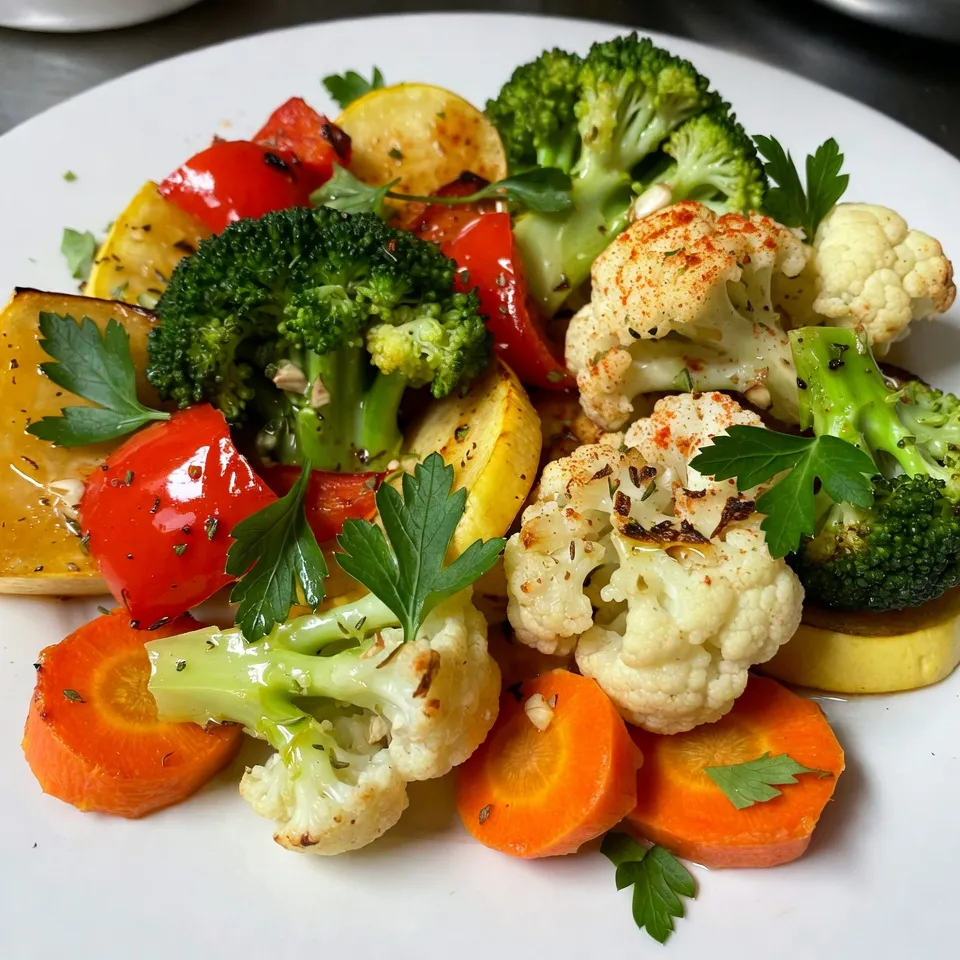
Get ready to transform your meals with my Garlic Herb Roasted Vegetables recipe! This dish is packed with flavor and super easy to make. Fresh veggies, garlic, and herbs roast together to create a tasty side or main. Whether you’re a kitchen newbie or a cooking pro, you’ll love how simple it is to prepare. Ready to dive in? Let’s get started on this delicious adventure!
Why I Love This Recipe
- Health Benefits: This dish packs a nutrient-rich punch with a variety of colorful vegetables that are loaded with vitamins and minerals.
- Flavorful Seasoning: The combination of garlic, thyme, and rosemary elevates the natural flavors of the vegetables, making each bite delectable.
- Easy Preparation: With simple ingredients and straightforward steps, this recipe is perfect for busy weeknights or meal prep sessions.
- Versatile Side Dish: These roasted vegetables complement a wide range of main courses, making them a go-to side for any meal.
Ingredients
List of Vegetables
To make garlic herb roasted vegetables, you need:
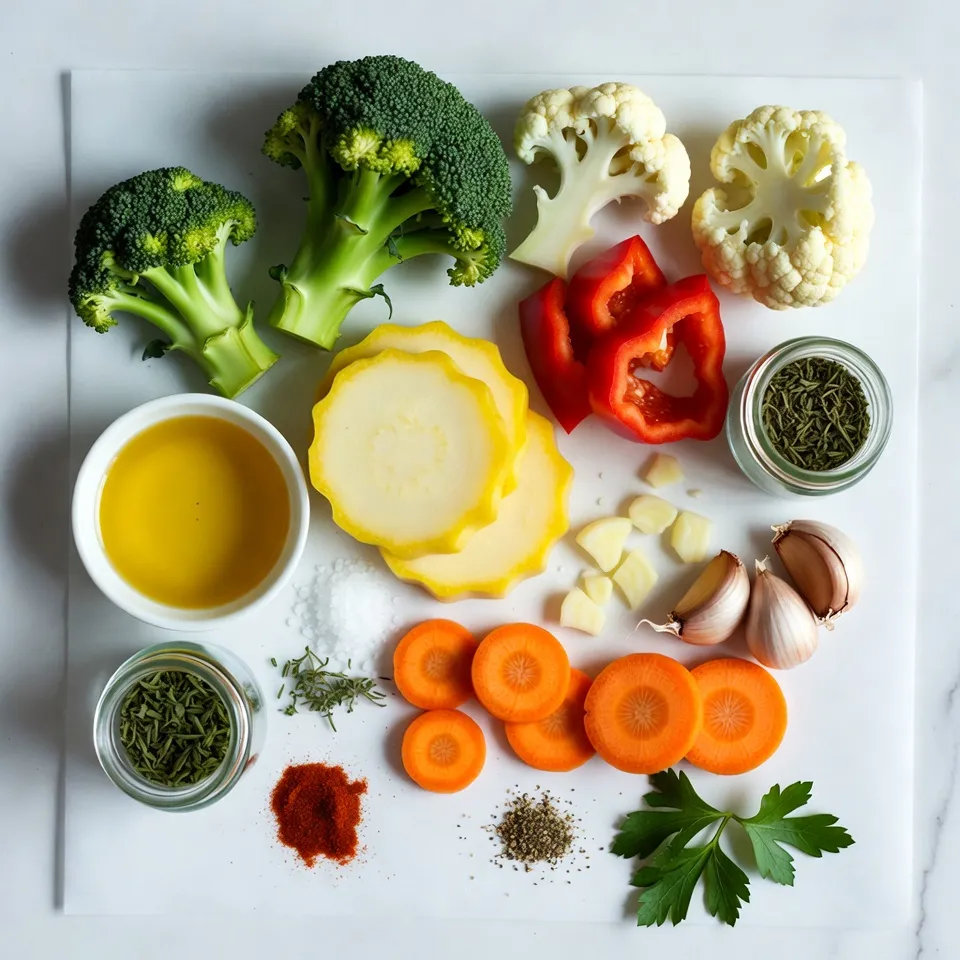
– 2 cups broccoli florets
– 2 cups cauliflower florets
– 1 red bell pepper, chopped
– 1 yellow squash, sliced
– 2 carrots, sliced
These vegetables bring color and nutrition to your dish. Broccoli and cauliflower add crunch, while bell pepper adds sweetness. Yellow squash and carrots provide a nice texture and flavor.
Seasoning Ingredients
For the perfect seasoning, gather:
– 4 cloves garlic, minced
– 3 tablespoons olive oil
– 1 teaspoon dried thyme
– 1 teaspoon dried rosemary
– 1 teaspoon paprika
– Salt and pepper to taste
These seasonings create a lovely aroma and taste. Garlic adds depth, while olive oil helps the veggies roast to a golden brown. Thyme and rosemary bring a fresh, earthy flavor.
Optional Garnishes
You can make your dish even better with:
– Fresh parsley, chopped
Chopped parsley adds a bright touch and a burst of flavor. It makes the dish look nice and adds freshness. You can also try other herbs like basil or chives if you like.
Step-by-Step Instructions
Preheating the Oven
Start by preheating your oven to 425°F (220°C). This high heat helps the vegetables roast well. Warm air cooks them evenly and makes them crispy.
Preparing the Vegetables
Next, take a large mixing bowl. Add 2 cups of broccoli florets, 2 cups of cauliflower florets, 1 chopped red bell pepper, 1 sliced yellow squash, and 2 sliced carrots. Make sure to wash the veggies first. Cut them into pieces that are about the same size. This way, they cook evenly.
Mixing the Seasonings
In a small bowl, mix your seasonings. Whisk together 3 tablespoons of olive oil, 4 minced garlic cloves, 1 teaspoon of dried thyme, 1 teaspoon of dried rosemary, and 1 teaspoon of paprika. Add salt and pepper to taste. This mix will give the veggies great flavor.
Roasting Process
Pour the seasoning mixture over the vegetables. Toss them well so every piece gets covered. Spread the veggies on a baking sheet lined with parchment paper. Roast in the oven for 25-30 minutes. Stir them halfway through. This keeps them from burning and helps them cook evenly. When they are tender and slightly crispy, they are ready. Let them cool for a few minutes before serving. Garnish with chopped fresh parsley for a nice touch.
Tips & Tricks
Best Practices for Roasting Vegetables
Roasting brings out the best flavors in vegetables. Here are some helpful tips:
– Cut Veggies Evenly: Cut your vegetables into similar sizes. This helps them cook evenly.
– Use a Hot Oven: Roasting in a hot oven, like 425°F (220°C), creates a nice crisp.
– Don’t Overcrowd the Pan: If vegetables are too close, they steam instead of roast.
– Stir Halfway: Stir the veggies halfway through cooking for even browning.
How to Select Fresh Vegetables
Choosing fresh vegetables is key for great taste. Follow these tips:
– Look for Bright Colors: Choose veggies with bright, vibrant colors. This shows they are fresh.
– Check for Firmness: Gently squeeze the vegetables. They should feel firm, not soft.
– Smell the Produce: Fresh vegetables have a nice, earthy smell. Avoid those with no scent or a rotten smell.
– Seasonal Choices: Select vegetables that are in season for the best flavor and price.
Adjusting Seasonings to Taste
Seasonings can change how your dish tastes. Here’s how to adjust them:
– Start with the Basics: Use the recipe’s base seasonings like garlic, thyme, and rosemary.
– Taste as You Go: After mixing the seasonings, taste a small piece. Adjust as needed.
– Add Spice: If you enjoy heat, consider adding a pinch of red pepper flakes.
– Fresh Herbs: If you have fresh herbs, use them instead of dried for a brighter flavor.
– Balance Flavors: If it’s too salty, add a splash of lemon juice for balance.
Pro Tips
- Choose Fresh Vegetables: Opt for seasonal and fresh vegetables to enhance the flavor and texture of your dish.
- Even Cutting: Cut your vegetables into similar sizes to ensure even cooking and a uniform texture.
- Adjust Seasoning: Taste your seasoning mixture before adding it to the vegetables; adjust salt and spices to your preference.
- Use Parchment Paper: Line your baking sheet with parchment paper for easier cleanup and to prevent sticking.
Variations
Substitutions for Vegetables
You can use many types of vegetables for this dish. If you don’t have broccoli or cauliflower, try zucchini or asparagus. Sweet potatoes work well, too. Just cut them into even pieces. This helps them cook at the same rate. You can also mix in some green beans or Brussels sprouts for variety.
Different Herb Combinations
Feel free to change the herbs to fit your taste. Instead of thyme and rosemary, try oregano or basil. You can even use fresh herbs if you have them. Fresh herbs can add brightness to your dish. Mix and match to find your favorite flavor profile. Just remember to use less of fresh herbs than dried ones.
Adding Protein for a Complete Meal
To make this a full meal, add protein. Chicken or shrimp pairs nicely with these veggies. Toss in chickpeas or lentils for a hearty vegan option. Cook the protein separately and add it in before serving. This adds flavor and makes your meal more filling. You can enjoy garlic herb roasted vegetables any time of the day!
Storage Information
How to Store Leftovers
After you enjoy your garlic herb roasted vegetables, store any leftovers in an airtight container. Make sure to let them cool down first. This keeps them fresh and tasty. You can keep them in the fridge for up to four days. If you want to eat them later, freezing is a great option.
Reheating Tips
To reheat your roasted veggies, you can use the oven or microwave. If you use the oven, set it to 350°F (175°C). Spread the vegetables on a baking sheet and heat for about 10 to 15 minutes. This keeps them crispy. If you use a microwave, heat them in short bursts. Check every 30 seconds until they are warm. This way, they won’t get soggy.
Freezing for Later
Freezing garlic herb roasted vegetables is easy. First, let them cool completely. Then, put them in a freezer-safe bag. Squeeze out as much air as you can before sealing. Label the bag with the date. You can freeze them for up to three months. When you’re ready to use them, thaw in the fridge overnight and reheat as usual. Enjoy your delicious veggies anytime!
FAQs
What is the best temperature for roasting vegetables?
The best temperature for roasting vegetables is 425°F (220°C). This high heat helps the veggies get tender and a bit crispy. It also brings out their natural sweetness. When you roast at this temperature, the outside gets nice and brown while the inside stays soft. This balance makes every bite flavorful and enjoyable.
How long can I store garlic herb roasted vegetables?
You can store garlic herb roasted vegetables in the fridge for about 3 to 5 days. Make sure to place them in an airtight container. This keeps them fresh and tasty. When you’re ready to eat, just reheat them in the oven or microwave. They will still taste great, but the texture may change a bit.
Can I make garlic herb roasted vegetables ahead of time?
Yes, you can make garlic herb roasted vegetables ahead of time. Prepare them and store them in the fridge. You can roast them a day before your meal. This saves time and lets the flavors mix well. Just reheat them before serving for the best taste.
Roasting vegetables is simple and fun. You learned about the best ingredients to use, like fresh veggies and tasty seasonings. I shared step-by-step instructions to make it easy. With tips on selecting and storing, you can enjoy your dish later. Get creative with variations to match your taste. Remember, roasted veggies bring flavor and nutrition to your meals. Try different herbs and proteins for a full meal. Enjoy your delicious creations and share them with other